Johnny has got ’em all taped
The arrival of videotape has revolutionised making television at Elstree in 1963
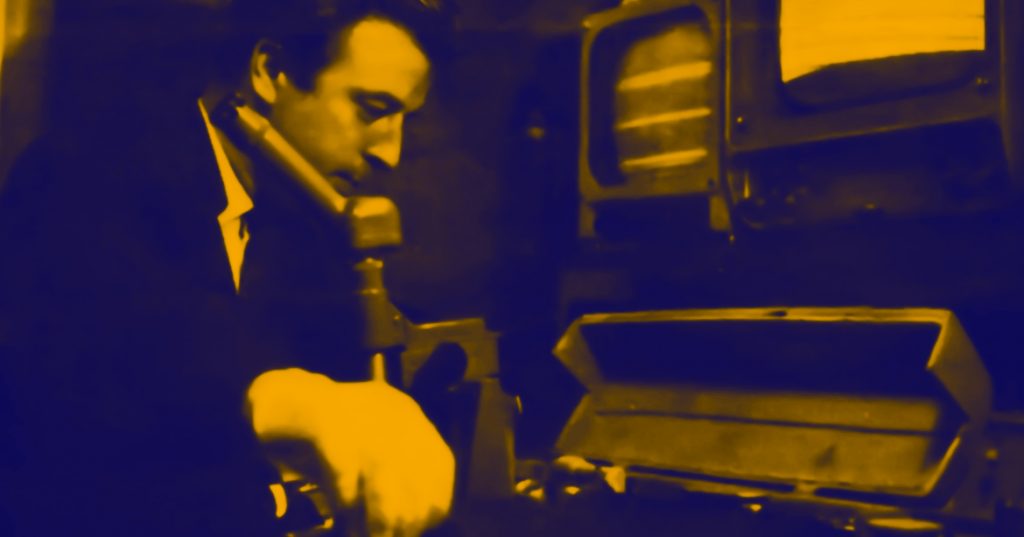
INCLUDING CHARLIE DRAKE!
⏺ THE editing of video-tape is a vital part of TV production these days, with the vast majority of programmes going on to Ampex before they reach the public’s screens. Editing tape is a highly skilled operation — there are probably less than a dozen men in the country who can do it. A striking example of editing at its most intricate was the Charlie Drake Show series, which was literally “cut up into little bits and put together again” in six complete shows. We asked JOHNNY FIELDER, Video-Tape Editor, to unfold the mysteries of his work for us.

VIDEO-TAPE was first introduced as a means of carrying television pictures way back in 1956. Due to the vast size of America with time differences from coast to coast there was a great demand for a new system of recording and replaying television shows.
A system had to be devised which would ensure not only excellent production but it also had to be technically possible to replay the tape immediately after recording.
Video-tape made all this possible. Its invention enabled shows to be recorded in peak viewing hours in thousands of miles to other states, as well as Canada. Each state thus receive top shows at their own peak viewing time.
The introduction of videotape machines into this country followed soon afterwards.
The machine itself looks like an overgrown orthodox tape machine with large spools to carry two-inch-wide tape, the tape passing the heads at 15.6 inches per second. The videohead, which records and replays picture, has four separate heads embedded in a disc rotating at 250 revolutions per second. The sound head is displaced by nine inch or .6 second in front of picture. Approximate cost of this machine is £25,000 [£461,000 in today’s money, allowing for inflation – Ed].
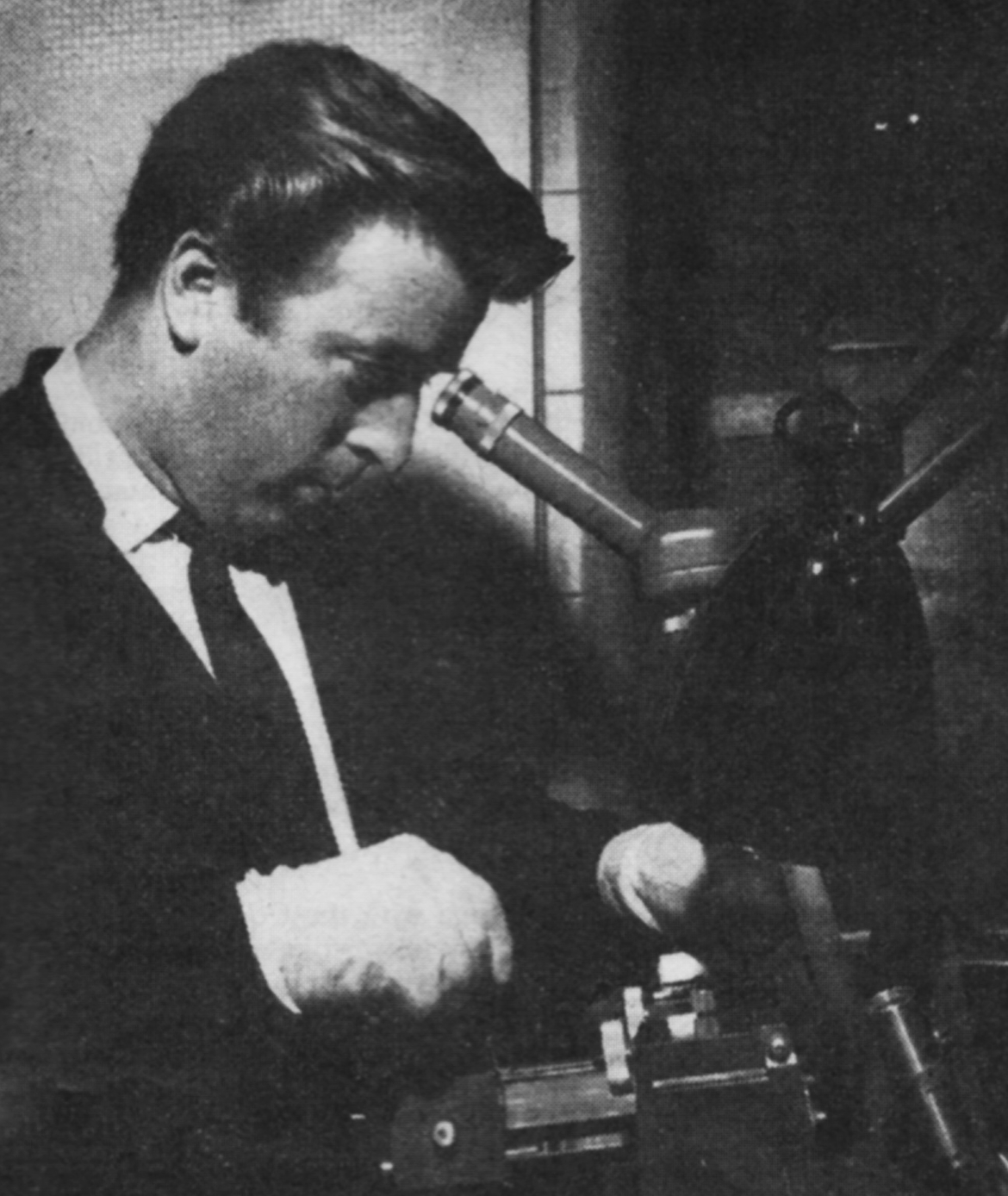
It wasn’t long before it was realised that the ability to edit this tape would be an advantage, and the necessary techniques were developed.
The actual editing of videotape which contains sound and vision (married print sound in front of vision) needs some thinking about, since you can’t see by holding it up to the light.
While the tape is playing on the machine a picture is displayed on the monitor. You have to select your cut while playing, stop, run back and play again. But, this time, the machine is stopped at the point of the cut.
This point is marked, run back and played again, this time checking that when the mark reaches the video-head to coincide with the selected cutting point.
Of course the sound track will help you for this can be heard by rocking back and forward over the sound head. If it is a musical cut of which there were quite a few in the Charlie Drake shows then the edit must be made to the sound track.
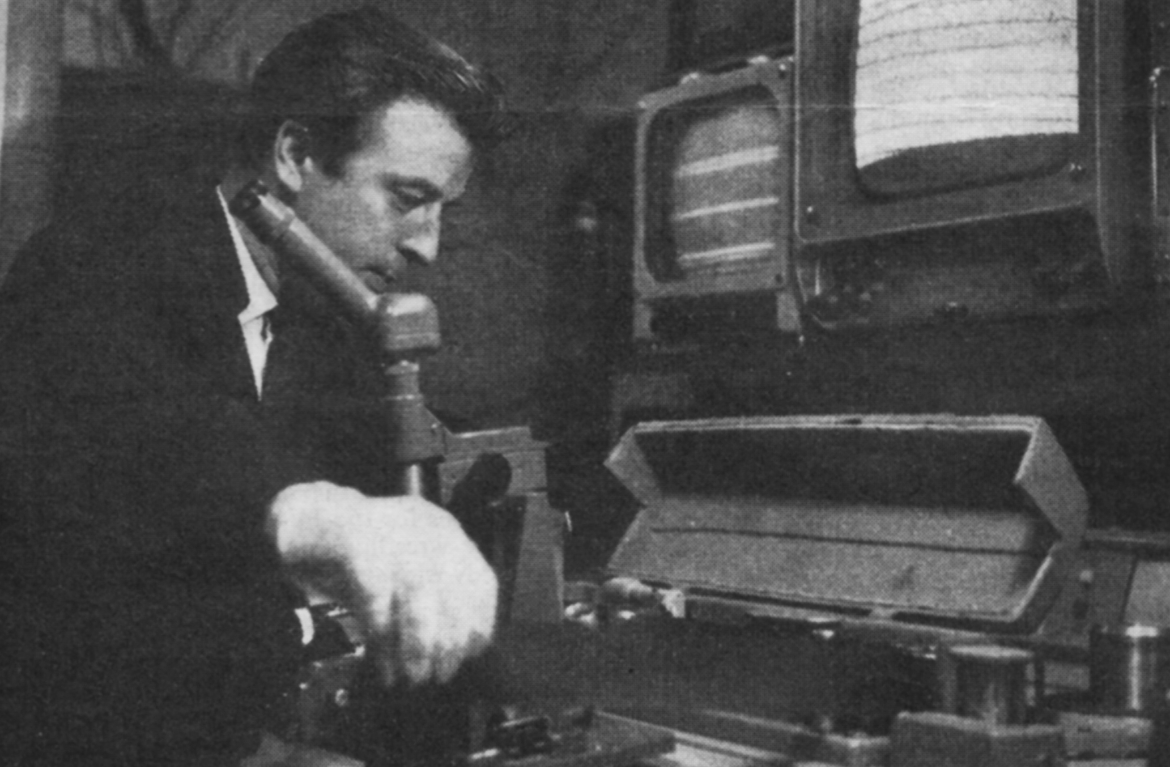
Nowadays a tape can be reused with edits in it after it has been through a test recording over the cuts, but obviously too many cuts make the tape unusable.
The Charlie Drake shows produced by Colin Clews were recorded in sections. There were 178 segments of which between 25-30 were put into each show. After it was decided which piece was to go where, the show was then split into two reels, one reel carrying all the odds the other evens.
Here Colin Clews, with his production team, wiped from reel to reel.
All this was then recorded on yet another machine, giving the final result of a new TV show presented in a new way.
About the author
Johnny Fielder was a VT editor and later director at ATV